
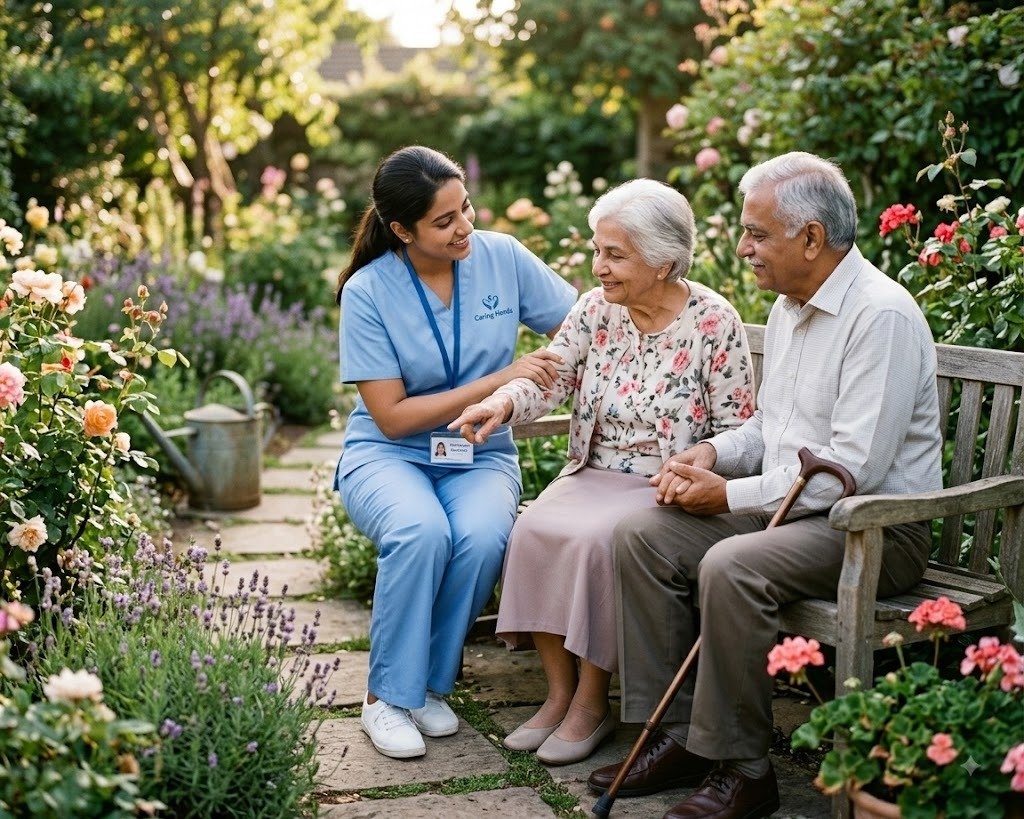
Elderly care at home, in simple terms, means a trained caregiver helping an older adult with everyday needs — in their own home, rather than a facility. Many families start looking into it when a parent or grandparent needs more day-to-day support than the family alone can consistently provide.
Arozen Healthcare provides elderly care in Gurugram, helping families arrange the right kind of everyday support for a loved one. This guide covers what elderly care at home typically involves, when it tends to become necessary, and how to think about choosing the right support.
What Is Elderly Care at Home?
At its core, elderly care at home is caregiver-based support — a trained caregiver assisting with daily routines, personal care, mobility, meals and companionship, where appropriate, so an older adult can continue living comfortably at home.
It's worth being clear about how this differs from other kinds of support. Elderly caregiving is non-clinical, everyday assistance. Home nursing care involves clinical responsibilities carried out by a qualified nurse. A doctor's visit covers diagnosis and medical decisions. Many older adults only need caregiver support; others need nursing or medical input as well, depending on their health.
When Might an Older Adult Need Extra Support?
A few common situations tend to prompt families to look into elderly care at home:
- Difficulty With Daily Routines
- When everyday tasks start becoming harder to manage independently and consistently.
- Reduced Mobility
- When moving around the home safely becomes more difficult without support.
- Living Alone
- Seniors living alone may benefit from regular company and a helping hand nearby.
- Recovery After Illness or Hospitalisation
- Extra support at home can help during the period after an illness or hospital stay.
- Need for Regular Assistance
- When day-to-day help is needed consistently, rather than occasionally.
- Family Members Needing Additional Support
- Sometimes it's less about the senior's needs alone, and more about the family needing extra caregiving support to keep up.
What Can Elderly Care at Home Include?
Depending on the individual, elderly care at home can include:
- Personal-care assistance, provided with dignity
- Mobility support around the home
- Meal and daily routine assistance
- Companionship and everyday conversation
- Basic household support related to the person's care
- Family communication and coordination
- Support with appointments and care routines, where appropriate
Benefits of Elderly Care at Home
- Familiar Surroundings
- Care is provided in the home the person already knows, rather than an unfamiliar facility.
- Greater Comfort and Dignity
- Everyday support delivered respectfully, on the person's own terms.
- Support With Everyday Routines
- Consistent help with daily tasks, easing pressure on the individual and family.
- Companionship
- Regular company that helps ease feelings of isolation.
- Family Involvement
- Family members can stay closely involved and informed about day-to-day care.
- Reduced Travel Burden
- No need to relocate or travel for everyday support and companionship.
- Continuity of Day-to-Day Support
- Consistent, familiar care over time, rather than support that changes hands often.
How Families Can Choose Elderly Care in Gurugram
A few things are worth working through before choosing a provider:
- Understand the Person's Actual Needs
- Start with a clear picture of what kind of everyday support is actually required.
- Check Caregiver Experience and Responsibilities
- Confirm what the caregiver is responsible for, and their experience with similar situations.
- Clarify Whether Nursing or Clinical Care Is Also Needed
- Work out whether the situation calls for caregiver support alone, or nursing care as well.
- Discuss Schedules and Care Routines
- Agree on timings and daily routines that genuinely fit the person's life.
- Maintain Communication With Family
- Families should stay informed and able to ask questions about ongoing care.
- Prioritise Safety, Hygiene and Dignity
- These basics should be consistent, every single visit.
- Have a Clear Process for Escalating Medical Concerns
- Confirm how the provider handles situations that need a doctor's or nurse's attention.
Elderly Care vs Home Nursing
Caregiver support focuses mainly on daily living and companionship — help with routines, mobility and everyday life. Home nursing involves clinical responsibilities that require a qualified nursing professional, such as monitoring or medication support. Some older adults only need one; many benefit from both, working together as part of the same care plan. For a closer look at nursing care specifically, see our guide on home nursing care.
Creating a Comfortable Home Care Routine
A few practical, non-medical habits tend to make everyday care smoother:
- Keeping daily routines consistent and predictable
- Making sure movement around the home is safe and unobstructed
- Maintaining open communication between the caregiver and family
- Keeping medications organised, without changing anything about the prescribed treatment itself
- Continuing regular medical follow-up as advised by the treating doctor or nurse
When Professional Medical Help Is Needed
Elderly care at home is built around everyday, non-clinical support. It isn't a substitute for medical assessment when something changes.
When to Seek Medical Attention
Sudden or serious symptoms should be assessed by a doctor promptly. If there's a medical emergency, hospital or emergency care should be sought immediately rather than relying on caregiver support alone.
For related reading, see our guides on home healthcare in Gurugram and home nursing care.